Juan de León y Castillo

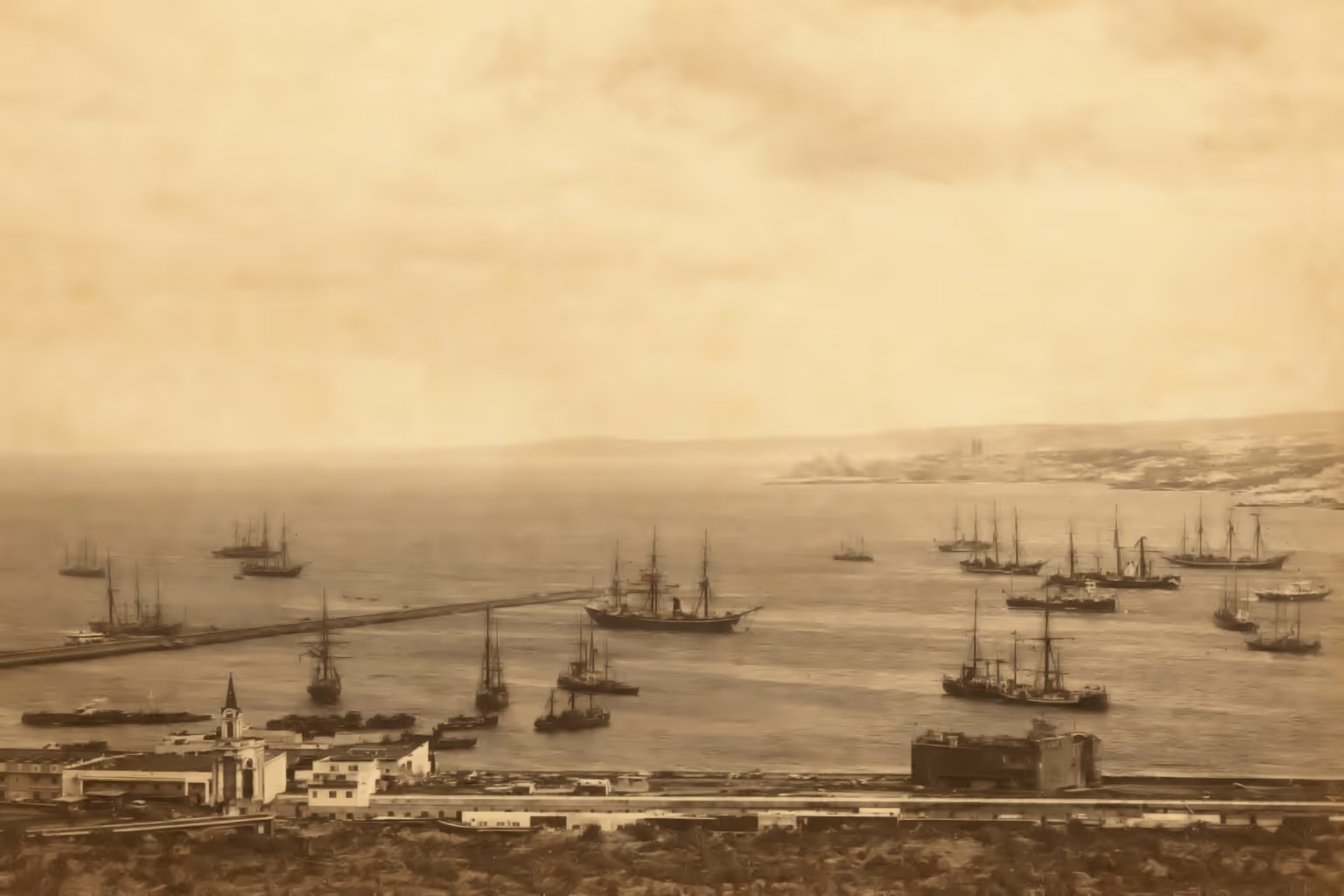
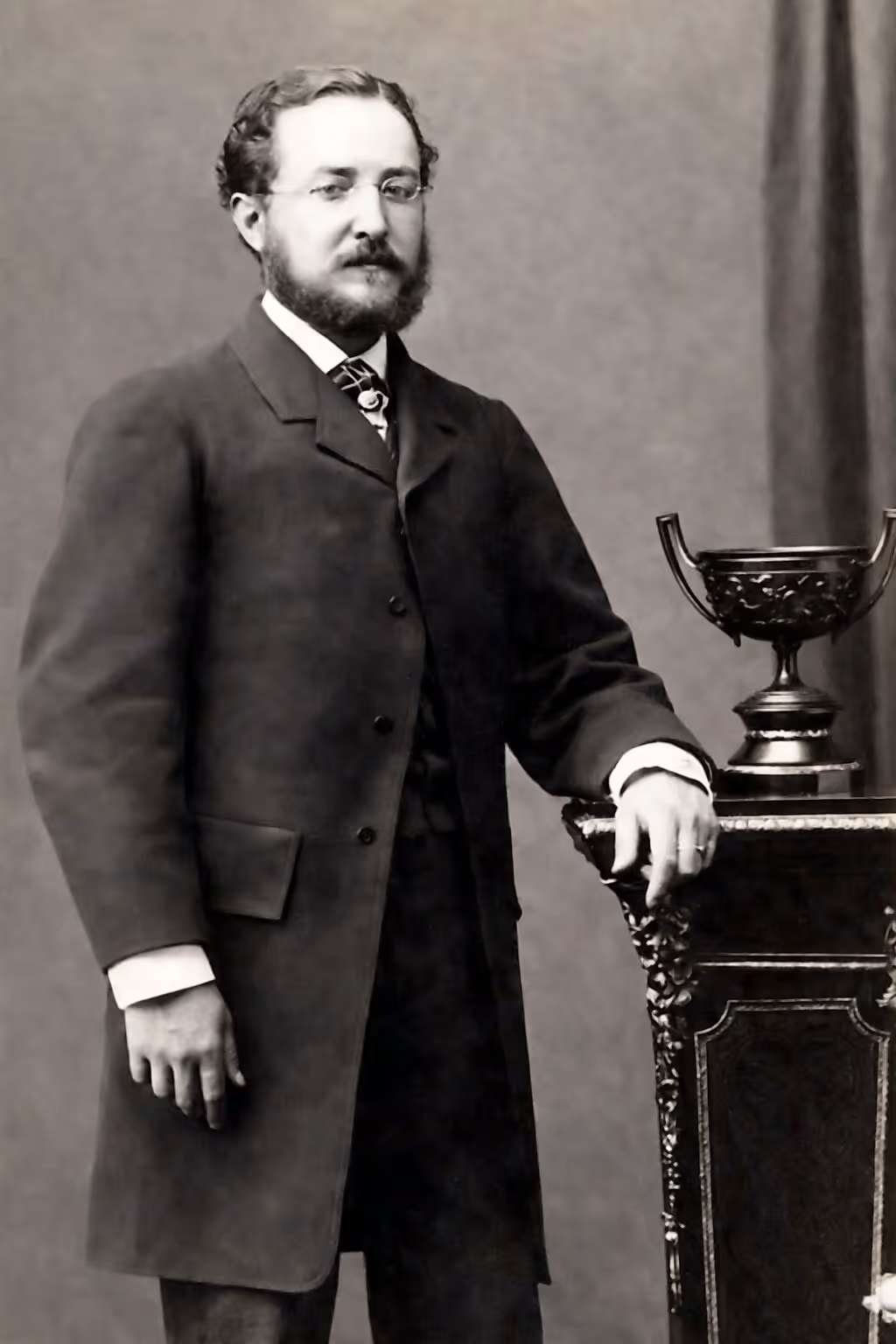
Juan de León y Castillo (1834-1912) was an extremely talented engineer, responsible for the design and construction of the main infrastructures on the island, such as its ports and road network. The fact is that, from the Puerto de La Luz in Las Palmas to the Maspalomas Lighthouse, virtually every major public construction project of the time bore the imprint of his ingenuity.

His brother, Fernando de León y Castillo, Marquess de Muni, a famous lawyer and politician, was also another very prominent figure of the time. The Plaza de Santa Brígida is named in honour of the two brothers, paying tribute to these distinguished Canarian figures. Additionally, in the town of Telde there is an interesting museum dedicated to the life and work of both illustrious brothers.

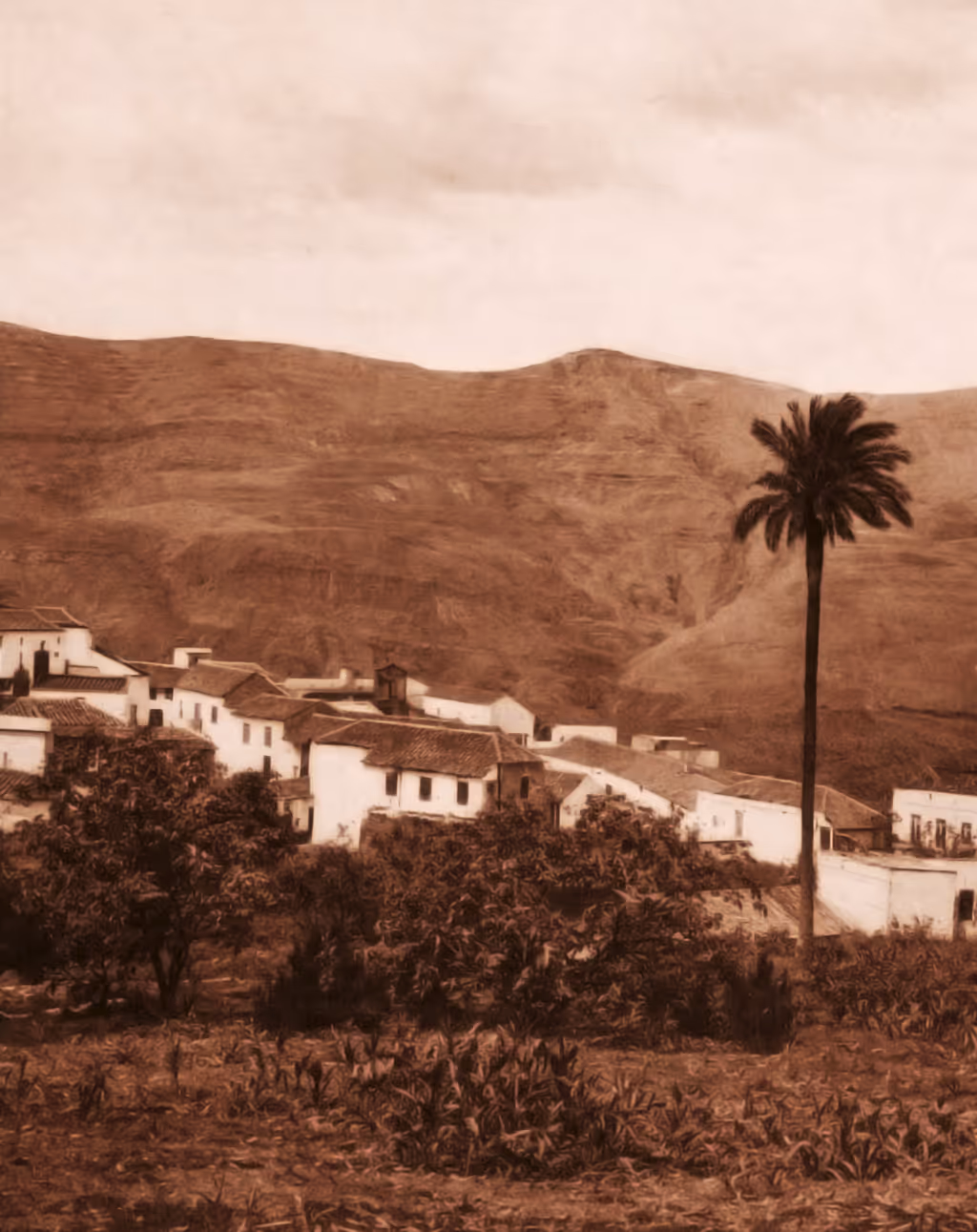
Juan de León y Castillo aspired to a home of his own where he could rest and care for his ailing wife, who required peace and quiet. After an intense search, he built the original house in 1898, in a secluded and quiet place, surrounded by vegetation and offering incomparable views. From here, he could contemplate the silhouette of the beautiful Bandama volcano or the Puerto de La Luz in Las Palmas de Gran Canaria, which he himself built. Today, Domaine du Marquis preserves that promise of silence and absolute rest for its guests.
His Legacy

The legacy of Juan de León y Castillo is essential to understand the modernization of Gran Canaria. He stands out as an engineer of extraordinary talent whose work permanently transformed the infrastructure of the island.

The immense body of work produced by such a multidisciplinary and ingenious figure is difficult to summarize, as it spans a wide range of fields and areas of knowledge:

  • Engineering and Progress: He designed bold infrastructures that connected the island and encouraged its economic development.
  • Water Management: He carried out important hydraulic engineering projects, such as the dam in the Tamaraceite ravine.
  • Humanist Vision: He combined engineering with a political and humanist vision, working together with his brother Fernando de León y Castillo.
  • Recognition: He is remembered as one of the most important figures in the technical and political history of the Canary Islands at the end of the 19th century.

Legacy: His work is currently being reassessed and appreciated, highlighting its impact on urban modernization and his role as a “Distinguished son of the city of Telde”.


His legacy, together with that of his brother Fernando, is preserved and promoted through the Casa-Museo León y Castillo, in Telde, which presents their biographical and professional trajectories.

Ultimately, we are talking about an extraordinary person, who built a home in keeping with his character: equally unique and remarkable. Juan de León y Castillo embodied a spirit that encompassed all the virtues of modernity in its rationalist sense: unparalleled talent as an engineer, free thinking, liberal and democratic political principles, intellectual emancipation, an advocacy of the value of personal merit, and a philanthropic approach to social issues.

The Legacy of León y Castillo: A Historic Haven of Silence and Relaxation